

Định Công silvercraft village – 1,500 years of tradition
Renowned for its rich tradition of high craftsmanship, Định Công silvercraft village has thrived for 1,500 years. However, it now faces the challenge of disappearing.
By Trần Khánh An & Hà Linh
In the hustle and bustle of a southern district of Hà Nội, nestles a silversmiths inside a tranquil temple dedicated to the founders of the ancient craft.
Currently, the workshop has 10 workers, mostly young, and is owned by artisan Quách Phan Tuấn Anh.
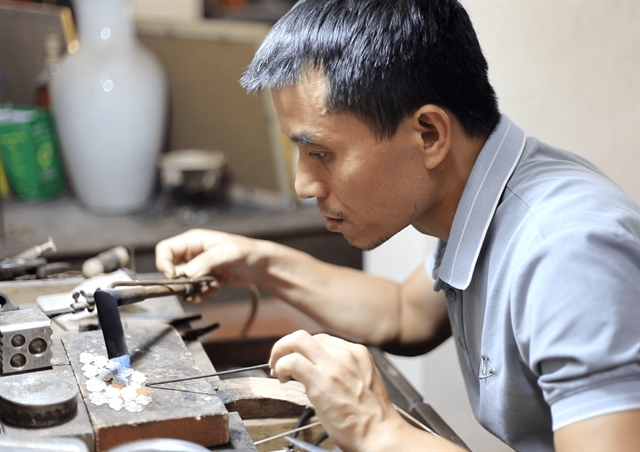
Holding a pair of tweezers in his right hand, Anh skilfully attaches a cloud design on a silver box. All around him, other silversmiths sit diligently perfecting their works of art.
History of Định Công silvercraft
The story of Định Công silvercraft village began in the sixth century, before the Lý Dynasty, when three brothers from the Trần family taught villagers to make silver jewellery.
Over centuries, Định Công became one of the four most elite craft villages in Thăng Long Citadel, producing altar items and fine jewellery.
Today, only two families remain in the trade: Anh’s workshop and that of artisan Quách Văn Hiểu.
Passing down the craft
“I grew up watching my father making silver jewellery every day. He was a wounded soldier who continued the craft to raise his children,” Anh recalled.
Initially, Anh did not want to follow the family tradition, but after graduating from the National Economics University, he realised the potential of silvercraft and returned to the trade.
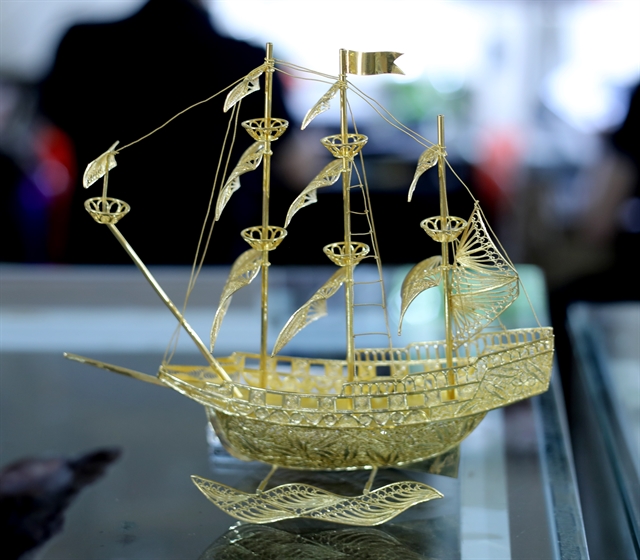
Exquisite craftsmanship
“Đậu bạc” refers to the technique of drawing silver wire and arranging it into shapes to form intricate patterns.
The process involves melting silver into ingots, pulling them into threads as thin as 0.3 mm, and carefully shaping them. Welding is the most challenging step, requiring patience and precision.
Handing on the torch
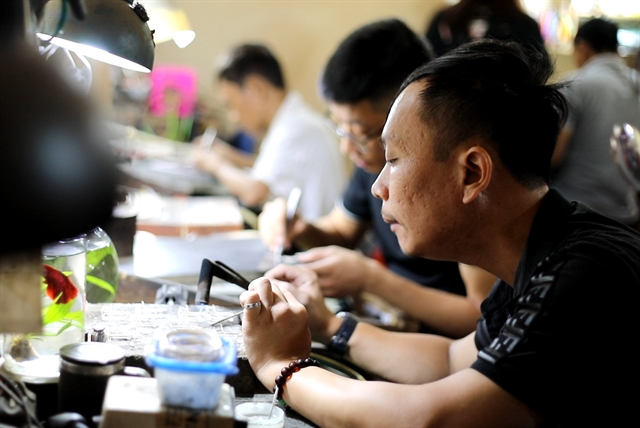
Anh offers free training to locals and outsiders to preserve the craft. Young apprentices like Nguyễn Nhật Thành have joined his workshop, learning the skills and culture of silversmithing.
His works have won first place twice in the Việt Nam national handicraft competition (2020, 2022).
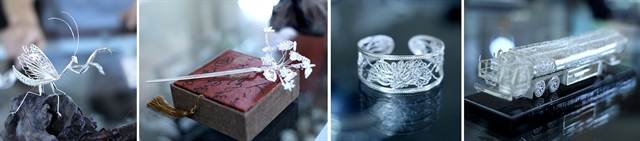
“When I finish a single product, I am so happy that I have surpassed myself. There are no limits to creativity in this craft,” Anh said.